Nociplastic pain
Pain arising from altered processing in the nervous system, rather than from clear ongoing tissue damage or nerve injury — a core focus of modern pain science.

Pain is real, and it is physical — and it is also profoundly shaped by the brain regions that process emotion, threat, and memory. Here is what the science tells us, in plain language for patients and in depth for clinicians.
For too long, physical pain and emotional suffering were treated as separate problems. The data tell a different story — one of deep, mechanistic overlap.
of people with PTSD also experience chronic pain.
of chronic pain patients meet criteria for depression.
When depression is treated, many people report lower pain intensity.
Early adversity raises lifelong risk of chronic pain.
The brain has sensitive developmental windows — critical periods when experience shapes the architecture of the stress, emotion, and pain systems. Adversity during these windows, from neglect to instability to abuse, can tune the nervous system toward threat.
This is why people with significant early-childhood trauma have a markedly higher likelihood of becoming chronic pain sufferers later in life. The body remembers what the mind cannot always name — and a system primed for danger is a system primed for pain.
Understanding this is not about blame. It is about a path forward: the same plasticity that encoded these patterns can, with the right tools, help rewrite them.
Early experience shapes the developing pain and stress circuitry.

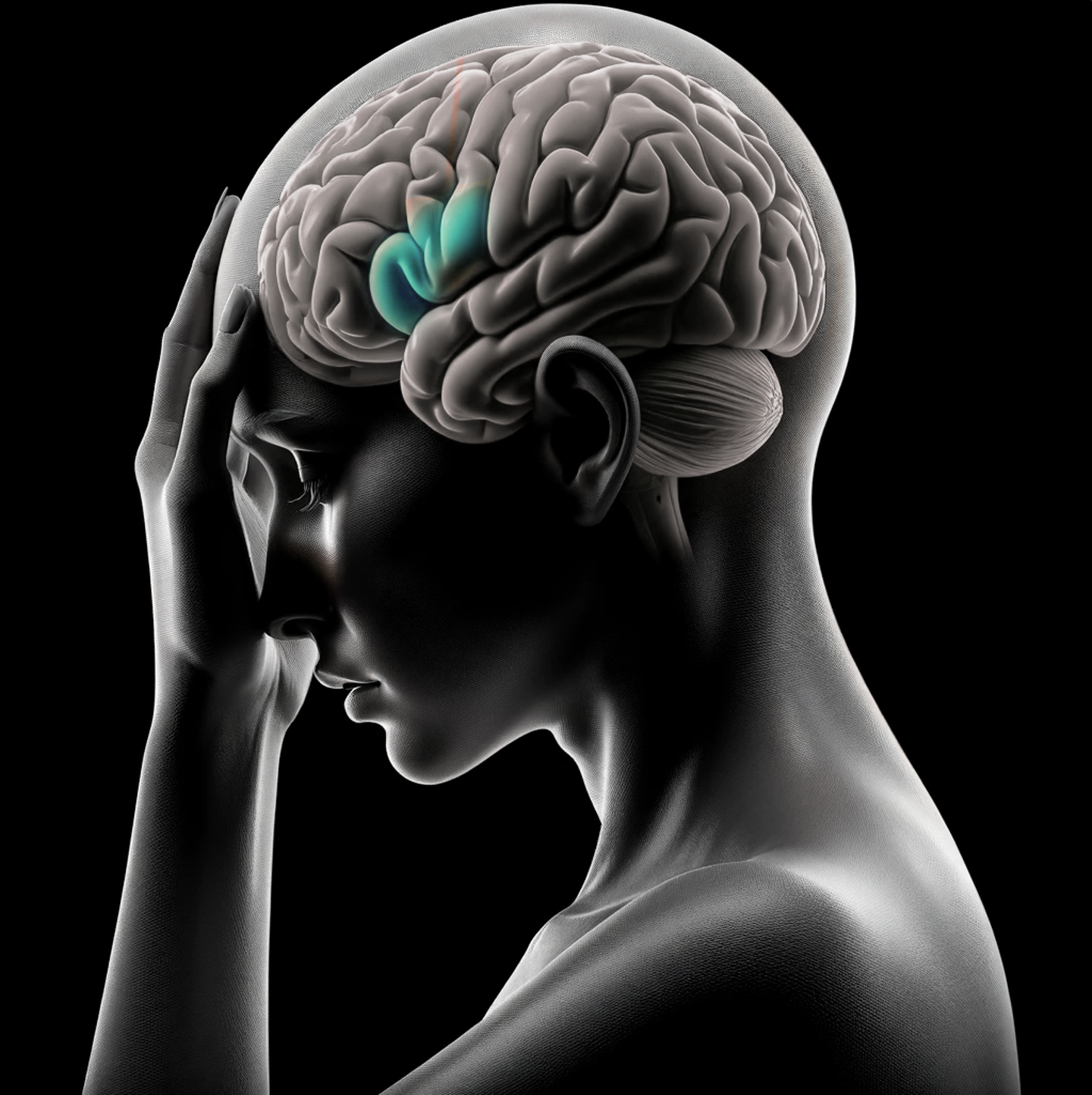
The anterior cingulate cortex — where emotion meets pain.
Pain is not processed by sensory nerves alone. Emotions are handled in regions such as the anterior cingulate cortex (ACC) and insula — and these same regions are woven directly into how pain is felt and given meaning.
When emotional processing is dysregulated, the pain experience can be amplified. This is one reason mood and pain rise and fall together — and why treating one can help the other.
A shared language for patients and clinicians navigating where pain and the mind meet.
Pain arising from altered processing in the nervous system, rather than from clear ongoing tissue damage or nerve injury — a core focus of modern pain science.
When the nervous system becomes turned up and over-responsive, amplifying signals so that even gentle input can register as pain.
The brain and nervous system's ability to rewire. It is how pain can become chronic — and, crucially, how recovery becomes possible.
Hubs of emotional processing that are deeply intertwined with the felt experience of pain and its emotional toll.
The vagus nerve and autonomic nervous system shape whether the body rests in safety or braces for threat — with direct consequences for pain.
Adverse Childhood Experiences. A higher ACE burden is associated with greater lifetime risk of chronic pain and related conditions.
What could go wrong giving an addictive drug that brings instant relief from pain — and from anxiety and depression — until it wears off, and all three come back worse than ever?
Why ignoring mental health and trauma has made the pain crisis so intractable
If trauma can sensitize the pain system, then the right interventions — across medicine, therapy, and technology — can help re-regulate it.
Therapies — like Cacti's neuroplastogens — designed to address the underlying biology rather than only masking symptoms.
Modalities that address the nervous system's learned threat response — somatic, cognitive, and relational approaches.
App-based CBT and pain-reprocessing tools are an emerging frontier — and an area we believe could one day serve PTSD and chronic pain together.
Subscribe to our forthcoming weekly dispatch on trauma, the brain, and pain.